61% off on product page · save $29.15
Types of Soup Bowls: A Guide to Shapes and Sizes
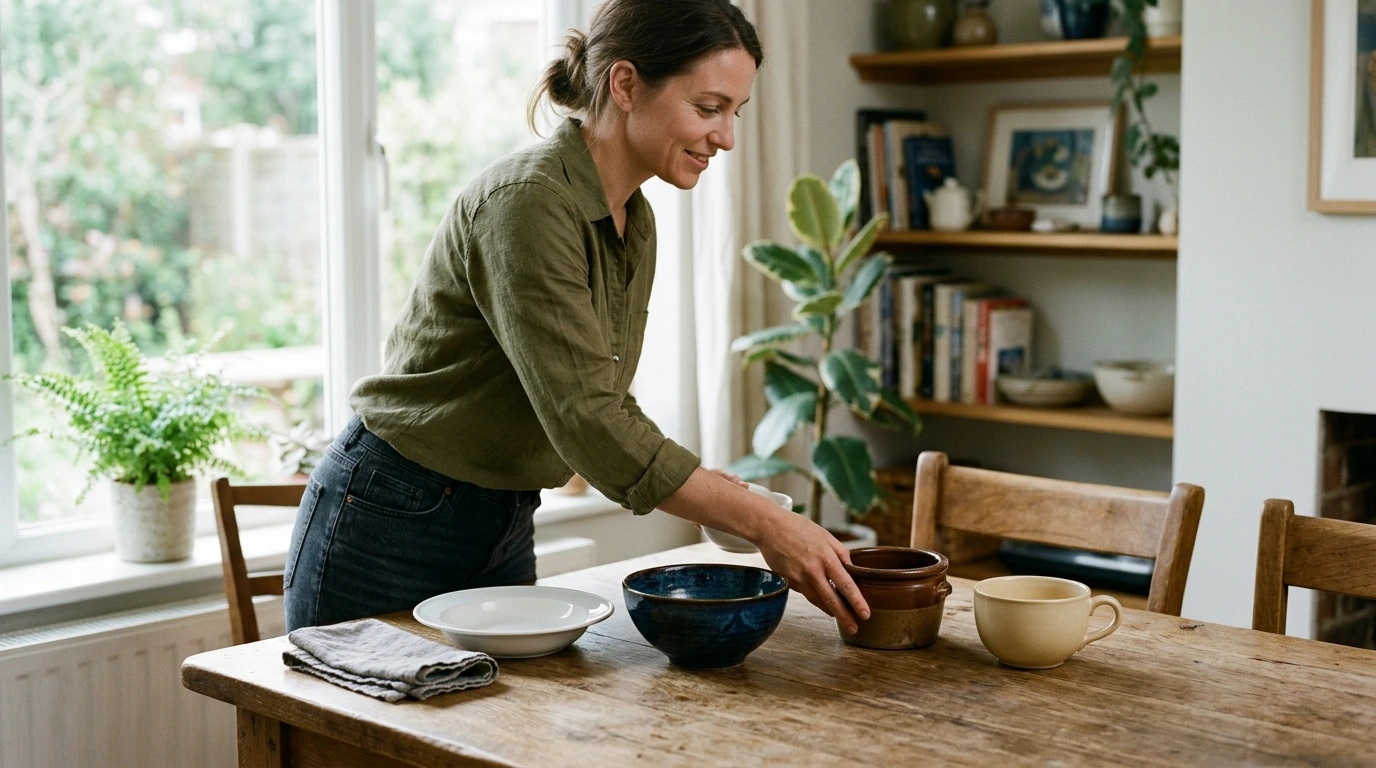
Deep, round soup bowls are a familiar choice for brothy soups, stews, and chili because their sides help contain both liquid and substantial ingredients. You can choose a smaller bowl for a starter or a larger one for a meal, leaving enough room below the rim to carry it without spilling.
Wide, shallow soup plates work well for smooth soups and smaller portions, and they give you room to add garnishes such as herbs or croutons. Compared with a deep bowl, a shallow shape presents more of the soup’s surface, but it may be less convenient for a large serving of broth.
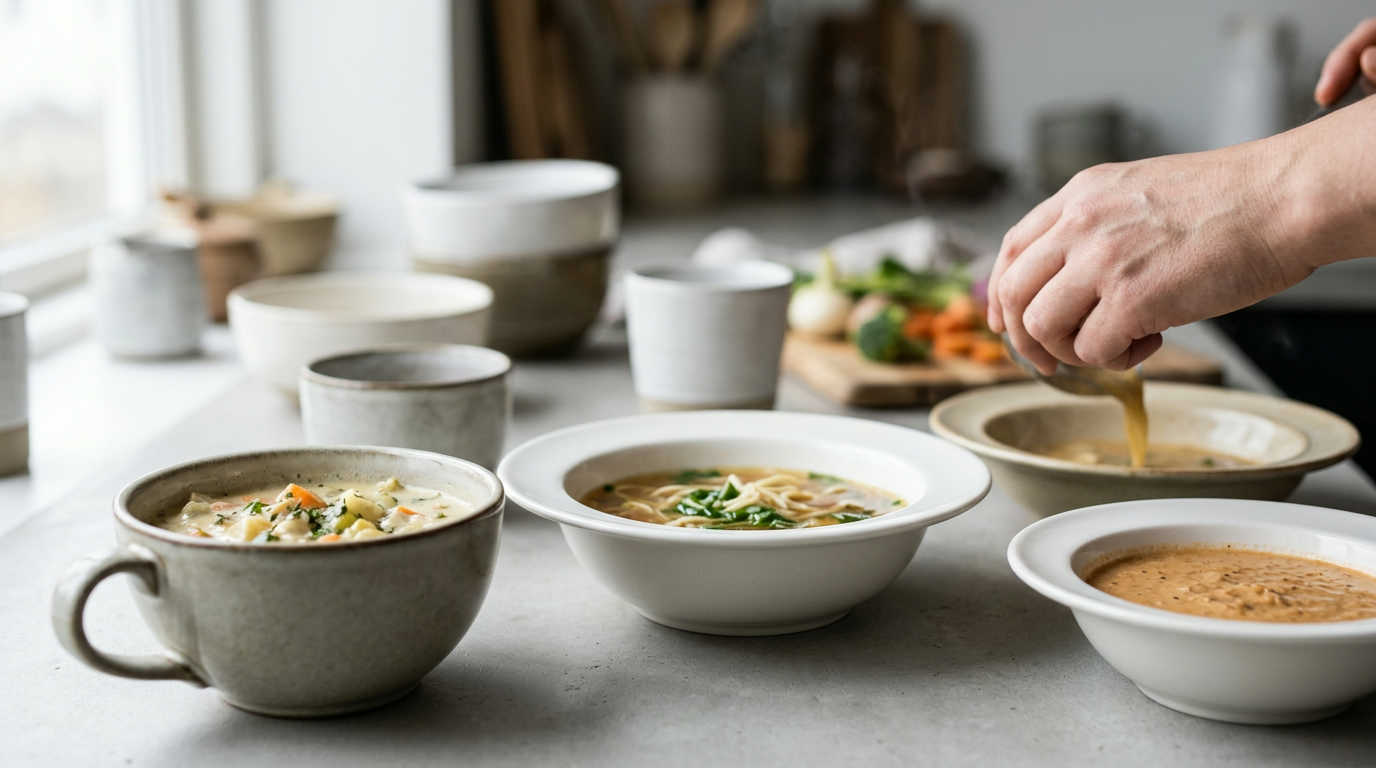
Noodle bowls are generally deep and roomy enough to hold broth, noodles, and toppings together, making them useful when you want to eat from one vessel. A wide opening gives you space to reach noodles and ingredients with utensils, while taller sides help keep broth contained as you move the bowl.
Handled soup bowls offer another shape to consider when you want a place to grip the bowl while serving or carrying it. Our Ceramic Noodle and Soup Bowl with Handle is one option to explore if you prefer a handled design for noodles or soup.
Featured in this guide
Ceramic Noodle and Soup Bowl with Handle
Soup cups are typically smaller than meal-size bowls and may have one or two handles, making them suitable for a light lunch or a first course. Soup crocks usually have deeper sides and a sturdy shape; they are often associated with dishes such as French onion soup, although not every crock is safe for oven use.
Covered soup bowls have a lid that can help keep a serving protected while it waits to be eaten, and some styles also include handles. If you plan to heat soup in its bowl, use only a vessel specifically marked as safe for the microwave or oven, as appropriate, and remember that handles and lids can become hot.
Ceramic bowls are a common choice for everyday dining, while glass, porcelain, and metal bowls offer other appearances and handling characteristics. For comfortable use, consider the bowl’s weight when full, the size of its opening, and whether its shape gives you enough room for your usual soup and toppings.
When caring for any soup bowl, follow its manufacturer’s cleaning and heating directions rather than assuming every material can go in the dishwasher or oven. Our team recommends letting a hot bowl cool before washing it and avoiding sudden temperature changes that could damage susceptible materials.
Watch · product page video
“Absolutely love this bowl. The handle is perfect for those hot soups, and it’s so easy to clean!”
Lunarina product page · Product review
Styles include deep round bowls, shallow soup plates, noodle bowls, handled cups, crocks, and covered bowls. You can choose among them based on the portion size, the type of soup, and how you prefer to serve it.
There is no single universal set of three bowl types, but one practical way to group soup bowls is by shape: deep bowls, shallow bowls, and handled bowls or cups. Each group can include several styles, so choose the one that suits your meal and serving preferences.


Leave a comment