
Boost Baby Communication Through Fun Playtime
20% off on product page · save $2.75
Boost Baby Communication Through Fun Playtime
Small Moments, Meaningful Connections
A coo, a curious look or a smile can be an invitation to connect. You can respond by copying a sound, naming what your baby is looking at or simply smiling back.
Pause to give your baby room to respond. A look, movement, sound or quiet attention can all be part of the exchange. There’s no need to expect a particular response or turn play into a performance.
Check the product’s listed specifications when evaluating small moments, meaningful connections.
Simple Ways to Play and Respond
You don’t need special equipment or a long activity plan. Choose a moment when your baby seems comfortable and alert, then use what is already nearby. A few ideas can help you get started:
- Name familiar things. During a meal or playtime, point out a cup, a spoon, or a favorite toy. Speak naturally and give your baby time to look or listen.
- Copy a sound. If your baby coos or babbles, try making a similar sound. Pause afterward to see whether they respond.
- Sing a short song. Repeat a familiar rhyme and leave a little pause before a familiar word or action. Your baby may smile, move, or listen closely.
- Play peekaboo. Hide your face with your hands, then reveal it. Pause between turns and let your baby’s interest guide how long you continue.
Responses can be subtle, and they may look different from one day to the next. If your baby turns away, fusses, or seems tired or overwhelmed, take a break or switch to a quieter activity.
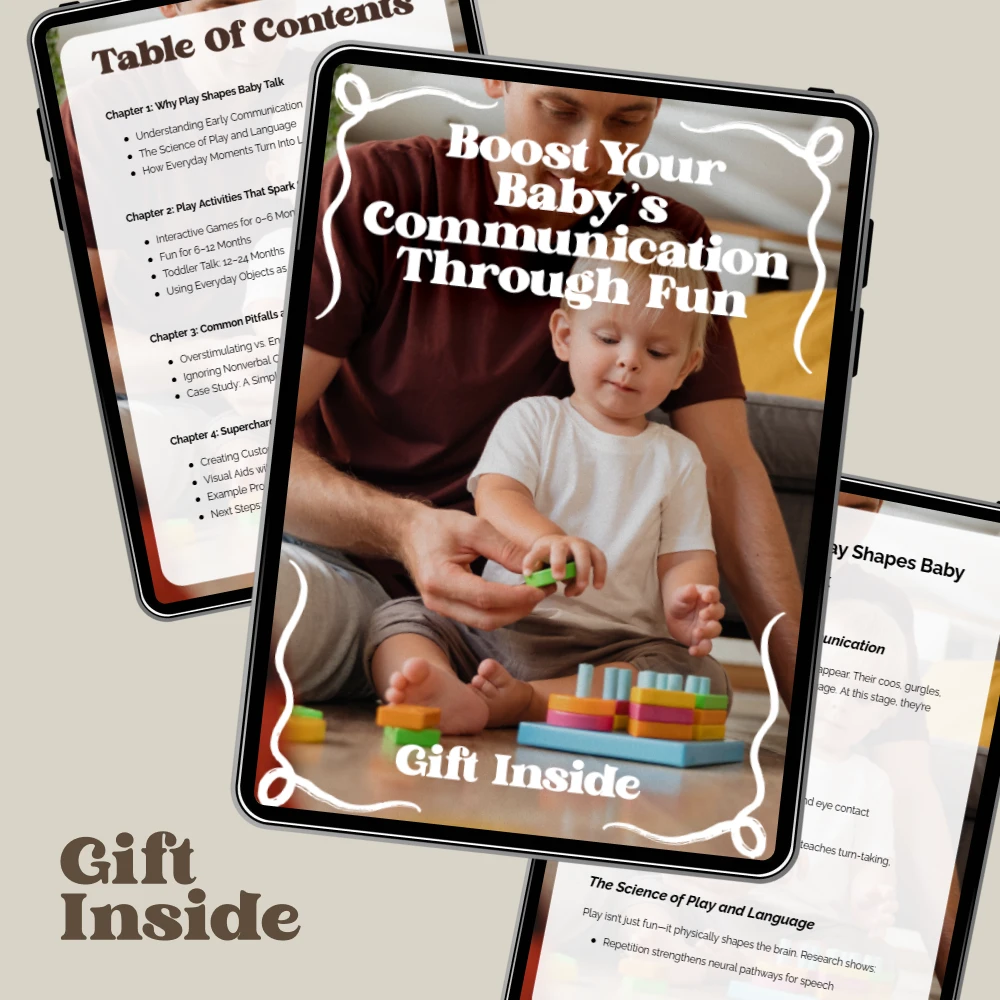
Featured in this guide
Boost Your Baby’s Communication Through Fun – Playtime to Boost Baby Communication Guide for Parents, Caregivers & Early Learners (Digital Download)
Make Room for Everyday Exchanges
Play can fit into routines you already share. While getting dressed, name a piece of clothing. When looking at a book, point to a picture and wait to see what catches your baby’s attention.
If your baby prefers turning the page to looking at the picture, follow that interest. You can talk about the page and enjoy the moment together.
Check the product’s listed specifications when evaluating make room for everyday exchanges.
Is a Digital Guide Right for You?
Our Boost Your Baby’s Communication Through Fun guide is a digital download for parents, caregivers and early learners. Its playtime focus makes it a resource to explore alongside your everyday interactions.
It may suit you if you prefer a digital resource rather than another physical item in your play space.
Check the product’s listed specifications when evaluating is a digital guide right for you.
Follow Your Baby’s Pace
Babies develop at different rates, and their interest can change from moment to moment. A short exchange or a quiet song can be enough; you don’t have to fill every awake minute with structured play.
If you have concerns about your baby’s communication or developmental milestones, talk with your pediatrician.
Check the product’s listed specifications when evaluating follow your baby’s pace.
Compare related options such as How to Escape a Car Loan You Can’t Afford – Step-by-Step Ebook Guide on How to Get Out of a Car Loan You Can’t Afford, Fix Your Finances & Protect Your Credit to match features, dimensions, and use case before choosing.
Before choosing, compare the product details with your daily routine, available space, care needs, and preferred setup. The strongest option is usually the one that fits the intended use clearly and remains simple to clean, store, and check before repeat use.
FAQ
What is the 5-3-3 rule for babies?
The “5-3-3 rule” can refer to a suggested nighttime feeding or sleep schedule, but it is not a universal rule for every baby. Feeding and sleep needs vary by age and individual circumstances, so ask your pediatrician for guidance suited to your baby.
What are signs of high IQ in babies?
Individual behaviors, such as early babbling or curiosity, are not reliable measures of a baby’s future IQ. Focus on your baby’s development and talk with your pediatrician if you have concerns.
At what age is 90% of the brain developed?
Brain growth is rapid in early childhood, but a single percentage does not capture all aspects of brain development. The brain continues to develop and change well beyond the early years.
See if Boost Your Baby’s Communication Through Fun – Playtime to Boost Baby Communication Guide for Parents, Caregivers & Early Learners (Digital Download) fits your setup


Leave a comment