
Why Are Montessori Toys Made of Wood? Benefits and Care
44% off on product page · save $42.98
Why Are Montessori Toys Made of Wood? Benefits and Care

Why wood is common in Montessori toys
Montessori toys are often made of wood because it gives children a tangible material to handle as they explore size, shape, weight, and texture. A simple wooden toy can also help keep attention on an activity itself, such as arranging pieces or practicing counting, rather than on flashing lights or electronic sounds.
Wood is not a requirement for Montessori learning, though: Montessori classrooms also use materials such as metal, glass, fabric, and paper when they suit an activity. What matters more is whether a material gives a child a meaningful, hands-on way to practice a skill with an appropriate level of independence.
How wooden toys support hands-on play
Wooden pieces can invite children to pick up, move, sort, and arrange objects, giving them a concrete way to explore ideas before working with them more abstractly. For example, moving objects one at a time while saying number names can make counting easier to follow than simply reciting a sequence.
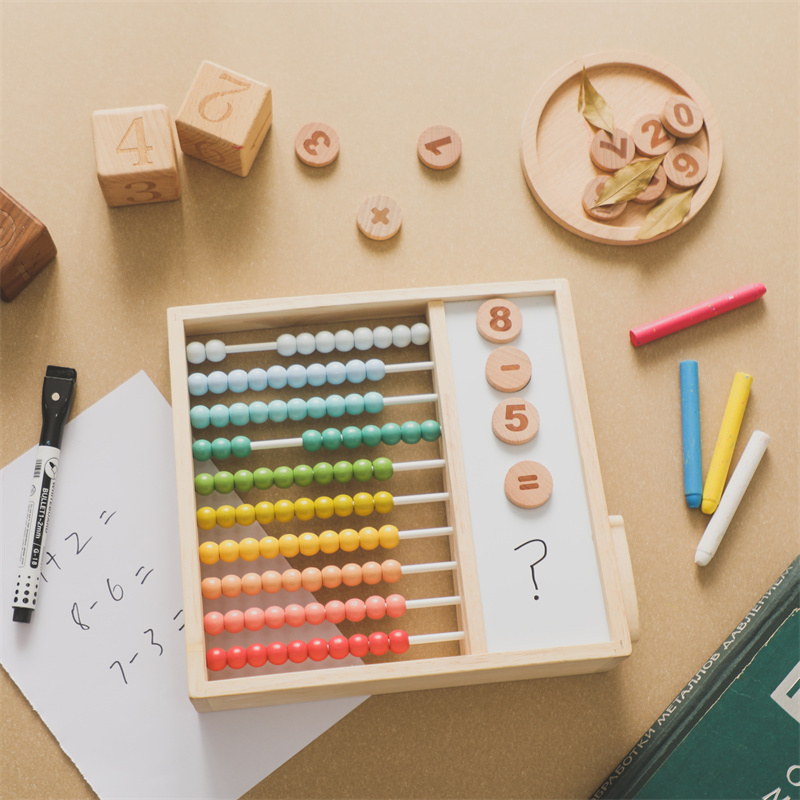
Our Kids Montessori Wooden Magnetic Math Counting Toy for Early Learning is one example of a wooden toy intended for early counting activities. For more ways to approach counting play, read our guide to wooden magnetic math toy counting ideas.
Check the product’s listed specifications when evaluating how wooden toys support hands-on play.
Featured in this guide
Kids Montessori Wooden Magnetic Math Counting Toy for Early Learning
Wood compared with other materials
Wood can feel different from plastic in a child’s hands, and many families appreciate its natural appearance and the straightforward designs often used for wooden toys. Plastic toys, however, can also offer valuable hands-on learning; the material alone does not determine whether a toy is engaging or appropriate for your child.
When choosing between toys, consider what your child can actually do with each one and whether the activity suits their current abilities. A manageable number of pieces and a clear purpose can be more useful than choosing wood solely because it looks Montessori-inspired.
Choosing and caring for wooden toys
Choose toys with smooth surfaces and securely attached parts, and match the size of any loose pieces to your child’s age and mouthing habits. Keep small magnets and loose magnetic parts away from young children, and seek immediate medical help if you suspect a magnet has been swallowed.
To care for a wooden toy, wipe it with a slightly damp cloth and dry it promptly rather than soaking it, since excess water can damage wood. Inspect it regularly for splinters, cracks, or loose components, and put it away if it becomes damaged.
FAQ
Why is everything Montessori wooden?
Not everything Montessori is wooden; Montessori activities can use many materials chosen for their purpose. Wood is common because it offers a tactile experience and often works well in simple, hands-on designs.
See if Kids Montessori Wooden Magnetic Math Counting Toy for Early Learning fits your setup


Leave a comment