44% off on product page · save $42.98
Hands-On Counting with a Wooden Magnetic Math Toy

When you sit down together, try offering an invitation rather than a test: “Want to count these with me?” Start with just a few items or numbers. Move slowly enough that your child can look closely and handle the materials, then pause to see what they choose to do. They might copy you, arrange things in a new way, or want to repeat the same step several times.
If the count gets mixed up, there’s no need to rush in with the answer. You can model a fresh attempt: “Let’s touch each one as we say a number.” The point is to make it comfortable to explore quantities and try an idea again. Some days your child may be eager to count; other days, simply moving and grouping the materials may hold their interest. Both can be part of a relaxed play session.

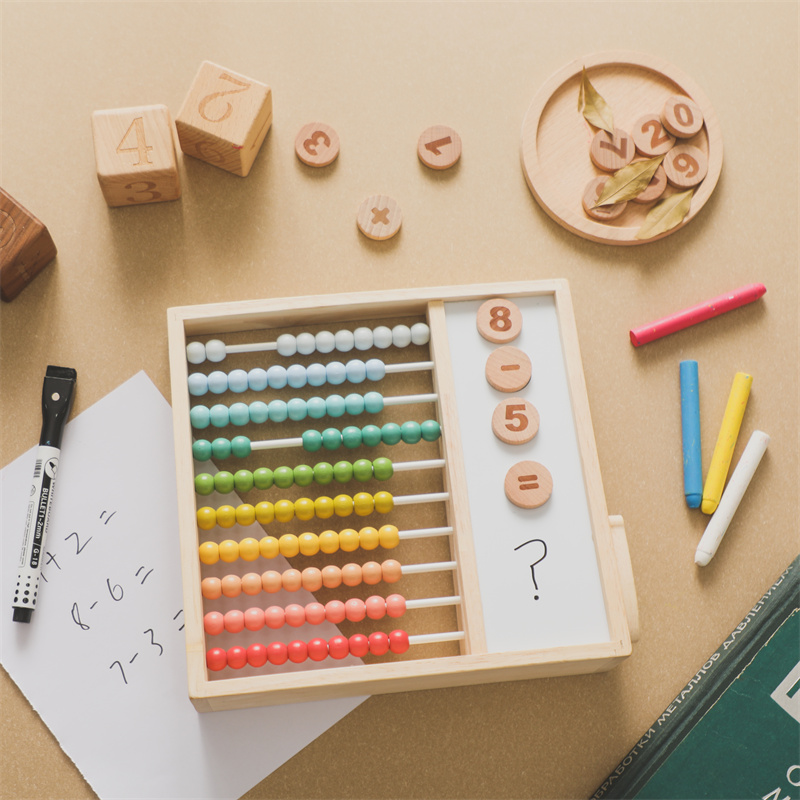
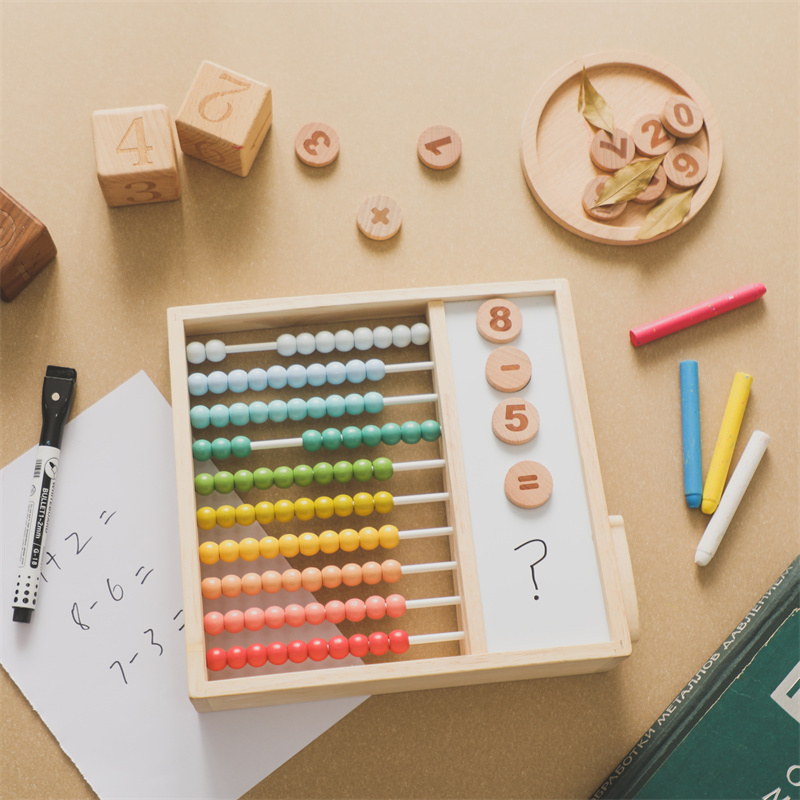
Count as you move. Set out a few suitable pieces. Touch or move one for each number you say, then invite your child to lead. If coordinating words and movement is difficult, you can say the numbers while they move the pieces.
Ask how many. Make a small group and give your child time to look or count before you count together. Change the group and ask again.
Compare groups. Set out two small groups and ask which has more. Your child can line up items from each group to see the difference, then try adding or taking away one.
Featured in this guide
Kids Montessori Wooden Magnetic Math Counting Toy for Early Learning
Follow the toy’s stated age guidance and supervise play. Before each use, inspect the pieces and stop using the toy if anything is loose or damaged. Because it is a magnetic toy, keep its pieces away from children who may mouth or swallow them. Use a clear play space so you can keep track of the pieces, and put them away afterward.
Gather a few items together and ask, “How many are here?” Give your child time to look or count before you respond. You can count together afterward, touching each item as you go. Try making a new group and asking the same question again. Repetition helps keep the routine familiar while the quantity changes.
Check the product’s listed specifications when evaluating make a group and ask how many.
Set out two small groups and ask, “Which has more?” You can also use “less” and “the same.” Rather than requiring a quick answer, let your child move the groups closer or line up items from one group with items from the other. If they want to change a group, ask what happens when they add one item or take one away.
A gentle progression for number play
| Play idea | What to say | What it practices |
|---|---|---|
| Count a small group | “Let’s touch each one as we count.” | One-to-one counting |
| Compare two groups | “Which group has more?” | Noticing quantities |
| Change a group | “What happens if we add one?” | Early addition concepts |
You don’t need to work through these ideas in order. Pick one that fits the moment, and stop while play still feels pleasant. The National Association for the Education of Young Children’s mathematics resources offer more ways to consider math in young children’s everyday experiences.
A wooden material can give your child something tangible to handle as they explore an idea. What matters most, though, is not the material by itself. A useful early-learning toy leaves room for your child to move items independently, repeat an activity, and notice a relationship between a number said aloud and a quantity they can see.
“Montessori” is more than a label for wood. The American Montessori Society’s introduction to Montessori describes an approach centered on children’s active learning and independence. At home, you can bring that spirit to number play by preparing a manageable activity, showing how to begin, and allowing your child time to take over. Our wooden magnetic counting toy can be one material you use that way; it doesn’t have to be the only way you explore numbers.
Brief sessions work well when your child is interested and you can join in. Clear enough space to keep track of the materials, and put them away when play is over. Before use, follow the product’s stated age guidance and inspect every piece. Because this is a magnetic toy, keep it away from children who may mouth or swallow pieces. Stop using it if any piece becomes loose or damaged.
Compare related options such as AI-Powered Ad Copy | Ad Copy Basics Using AI | Digital Marketing Guide for High-Converting Ads | Etsy-Style eBook for Small Businesses & Creators to match features, dimensions, and use case before choosing.
Wood can be a simple, tactile material for hands-on activities. A toy’s value also depends on whether it supports purposeful, child-led use; being wooden alone does not make it Montessori.
Look for simple wooden materials your child can handle independently and use repeatedly for a clear purpose. A counting toy may be a good option when its contents and age guidance suit your child.



Leave a comment