
61% off on product page · save $29.15
What Is the Best Material for a Soup Bowl?
For most everyday meals, we recommend ceramic as the best all-around material for a soup bowl because it offers a comfortable balance of practicality, appearance, and versatility at the table. A ceramic bowl can suit everything from a light broth to a hearty noodle soup, and its familiar weight and solid feel make it a natural choice for both casual lunches and more formal dinners.
Ceramic includes different types of fired clay, so the thickness, finish, and durability of individual bowls can vary. When choosing one, look for a stable base, enough capacity for your usual serving, and a shape that gives you room to stir or scoop without spilling.
Check the product’s listed specifications when evaluating why ceramic is a good choice.
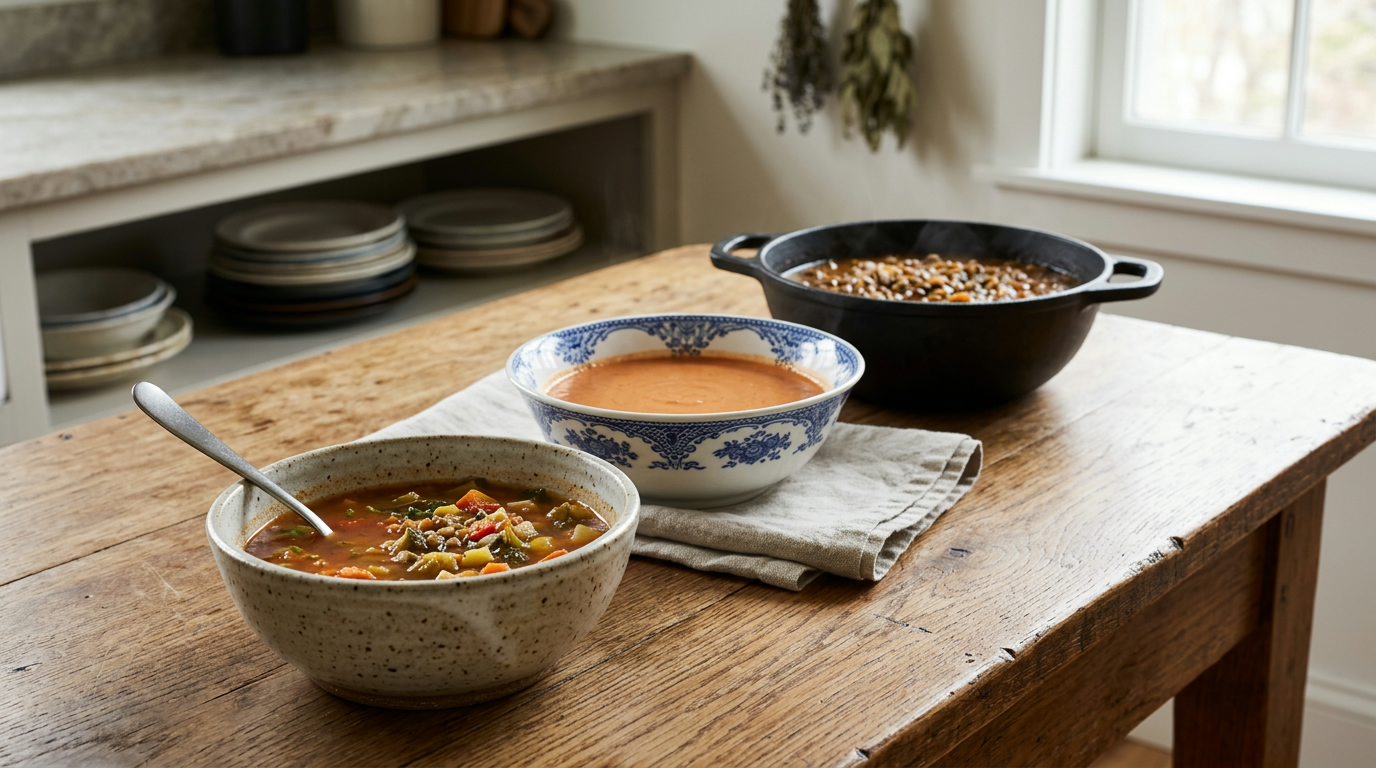
Porcelain is a type of ceramic that often has a refined, smooth appearance and can work well when you want a bowl that moves easily from everyday meals to a set table. Stoneware is another ceramic option, typically appreciated for its substantial feel, although a heavier bowl may be less comfortable to carry when it is full.
Glass lets you see the soup and can be easy to pair with other tableware, while stainless steel is a practical option when resistance to breakage matters more than a traditional table setting. Each material has trade-offs, so consider where you will eat, how much weight you want to lift, and whether you prefer a classic or more utilitarian look.
Check the product’s listed specifications when evaluating how other materials compare.
Featured in this guide
Ceramic Noodle and Soup Bowl with Handle
A wide bowl gives you room to reach ingredients with a spoon, while a deeper shape can be useful for noodles and generous portions of broth. For a bowl you plan to carry from the kitchen to the table, a handle is worth considering, though you should still use care because the bowl and handle can become hot.
Our Ceramic Noodle and Soup Bowl with Handle is an option to consider if you prefer a handled design for noodle dishes or soup. For more ideas about selecting a comfortable shape and size, read our guide to choosing a ceramic noodle and soup bowl with a handle.
Choose bowls intended for food use, and be cautious with antique, handmade, or decorative ceramics unless you know their glaze is food-safe. Avoid using a bowl for soup if its food-contact surface is chipped, cracked, or deteriorating, since damage can make thorough cleaning difficult.
Follow the manufacturer’s care directions for dishwashing, microwaving, and temperature changes, as these can differ between bowls. When handling hot soup, use a towel or oven mitt if needed, and let the bowl cool before washing it to avoid exposing it to an abrupt temperature change.
Watch · product page video
“Absolutely love this bowl. The handle is perfect for those hot soups, and it’s so easy to clean!”
Lunarina product page · Product review
Food-safe glass, stainless steel, and ceramic bowls with food-safe glazes are options to consider. Choose bowls intended for food use and avoid damaged or decorative ceramics when their food safety is uncertain.


Leave a comment