15% off on product page · save $1.94
How to Sell a Car You Still Owe On: 4 Steps

Your latest statement balance may not be the amount required to close the loan. Interest can continue to accrue between the statement date and the day the lender receives payment, so ask your lender for a dated payoff quote . Find out how long the quote is valid and how to request an updated one if your sale takes longer than expected.
Ask which payment methods the lender accepts, where the funds must go, and when it will provide a lien release or clear title after payoff. You can also ask whether the lender will help coordinate a sale directly with your buyer. Getting these answers early makes it easier to describe a realistic handoff timeline. The Consumer Financial Protection Bureau’s auto loan resources can help you review loan-related terms and questions before that conversation.
Compare local listings for cars with a similar year, mileage, condition, and features. Listings show asking prices, not necessarily final sale prices, so get more than one dealer or car-buying offer as another point of reference. Then compare a realistic sale price with your payoff quote.
If the car sells for more than you owe, you have positive equity : the amount left after the loan is paid is yours, subject to any applicable fees. If it sells for less, you have negative equity . You’ll need a plan to cover that difference so the lender can release its claim.
What your sale price means for your loan
| Situation | Example | What happens next |
|---|---|---|
| Sale price exceeds payoff | Sell for the listed price,000; owe the listed price,000 | Pay the lender the listed price,000 and keep the remaining the listed price,000, before any fees. |
| Sale price equals payoff | Sell for the listed price,000; owe the listed price,000 | Use the sale proceeds to pay the lender; expect little or no money left over. |
| Sale price is below payoff | Sell for the listed price,000; owe the listed price,000 | Arrange the additional the listed price,000 needed to satisfy the loan. |
Keep an eye on the payoff quote’s expiration date as you negotiate. A small change in accrued interest can change the final amount you need to bring to closing.
Featured in this guide
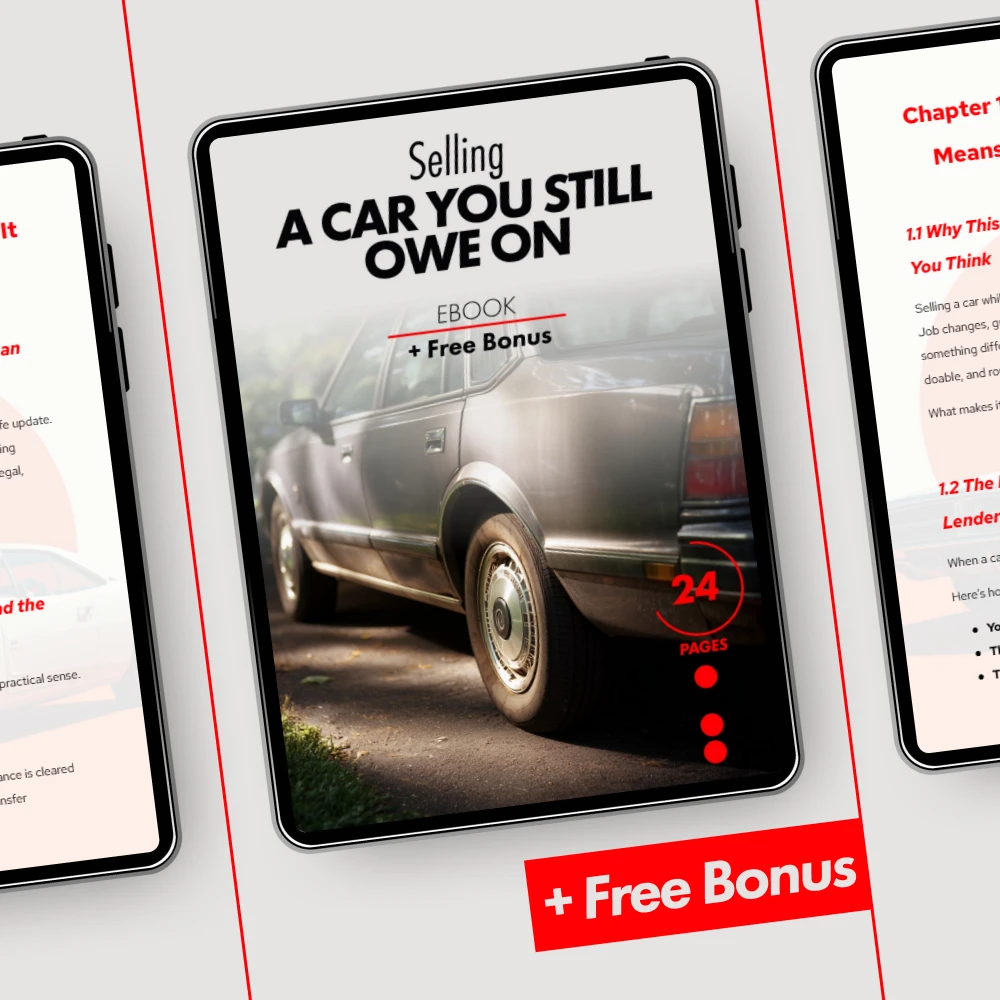
Selling a Car You Still Owe On: A Step-by-Step Guide to Successfully Selling a Financed Car
A dealer sale or trade-in may be simpler to coordinate because the dealer can explain its process for handling a financed vehicle. A private sale gives you responsibility for arranging payment and the title handoff with the buyer. Neither route guarantees a higher net amount: compare actual offers, any fees, and how a loan shortfall would be handled.
For a private sale, contact your lender before accepting payment. Ask how it wants to receive the payoff and what it can provide to the buyer while the title or lien release is being processed. Agree on a payment method you can verify; don’t rely on a screenshot or an unconfirmed promise that funds were sent.
Put the arrangement in writing. Your agreement should state the sale price, how and when the loan will be paid, who will cover any shortfall, and when the buyer will receive the documents needed to transfer ownership. If the lender needs processing time, make that timing clear rather than promising a clear title on the spot.
A dealer can explain how it handles a financed vehicle; in a private sale, you and the buyer need to coordinate directly with the lender. Compare actual offers, fees, and how any loan shortfall will be paid rather than assuming either route pays more.
Before accepting payment from a private buyer, confirm the lender’s payoff instructions and what documentation the buyer can receive while the title is processed. Use a payment method you can verify; a screenshot is not confirmation that funds have arrived. Put the sale price, payoff plan, responsibility for any shortfall, and document timeline in writing.
Follow the sequence agreed with your lender: verify payment, satisfy the loan, retain payoff confirmation and any required lien-release document, and complete the title transfer under your state’s rules. Keep copies of the signed sale paperwork and payment records.
Your state motor vehicle agency can tell you whether you need a bill of sale or odometer disclosure, how to handle plates and registration, and whether to file a notice of sale. Coordinate the keys with your payment and paperwork plan. Review when insurance coverage is no longer needed rather than canceling it before you’re ready to release the car.
Compare related options such as Calvin Klein Women’s Pink Suede Print Sneakers to match features, dimensions, and use case before choosing.
There is no universal “$3000 rule” for selling a financed car. What matters is the difference between your actual sale price and your current loan payoff, plus any fees you need to account for.
Selling a personal-use car for less than you paid generally does not create a deductible loss, while a gain may be taxable. If you may have a gain or unusual circumstances, consult current IRS guidance or a qualified tax professional; paying off the loan does not determine the tax result.
No buyer type consistently pays the most. Compare multiple dealer or car-buying offers with a realistic private-sale price, then consider fees and the work involved before choosing.




Leave a comment