
What Toys Are Actually Montessori? A Practical Guide
44% off on product page · save $42.98
What Toys Are Actually Montessori? A Practical Guide
What Makes a Toy Montessori?
A Montessori toy is best understood as a material that supports independent, purposeful activity: you can offer it to a child so they can explore, practice a skill, and repeat the activity at their own pace. It usually has a clear purpose and a manageable level of challenge, rather than relying on flashing lights, prerecorded instructions, or constant adult direction to keep the child engaged.
There is no universal certification that makes every toy labeled “Montessori” authentic, so look beyond the name and consider how your child will use it. A simple wooden toy is not automatically Montessori, while a practical activity with ordinary household objects can fit the approach when it is safe and appropriate for your child.
Examples of Montessori-Aligned Toys
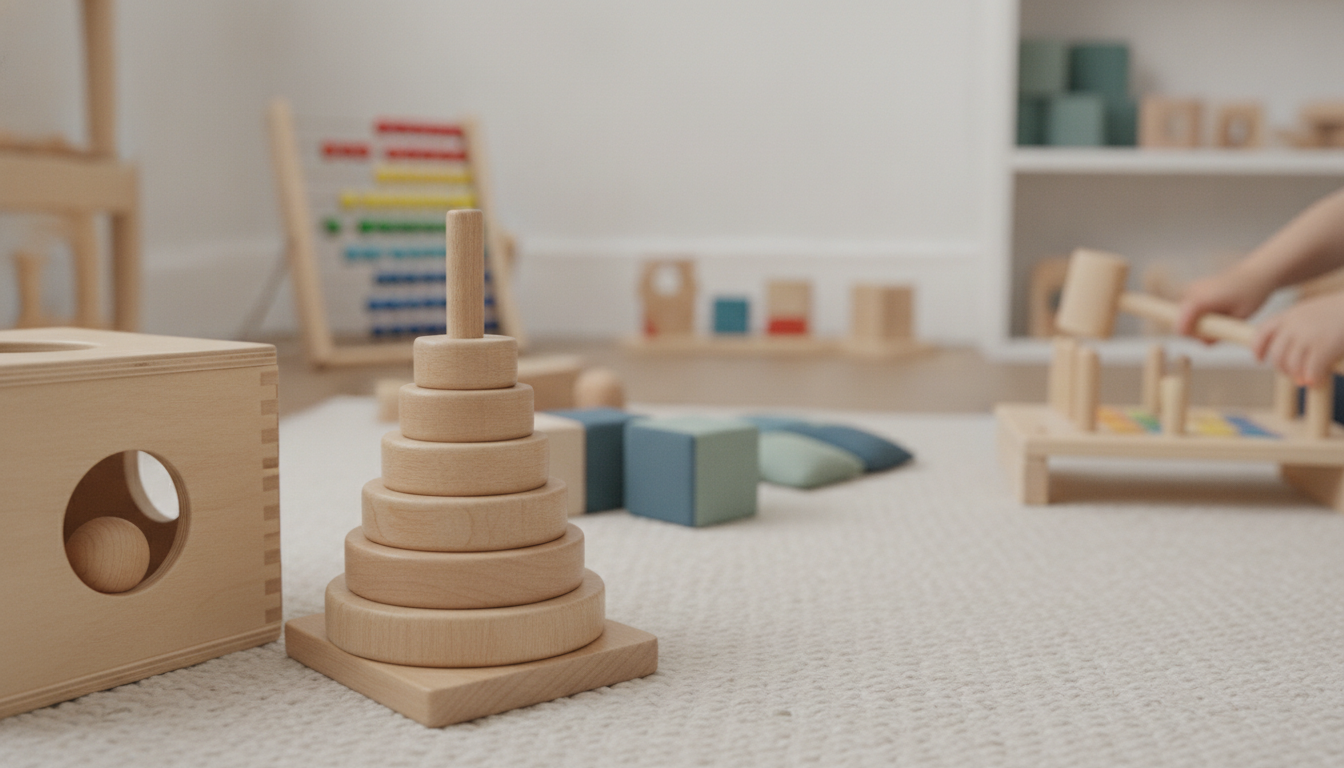
Examples include nesting cups, simple puzzles, shape sorters, stacking rings, and matching cards, all chosen to suit the child’s current abilities. Counting beads or number-and-quantity activities can also fit when a child is ready to explore counting with physical objects.
Practical-life materials, such as a child-size pitcher for pouring water or a brush for sweeping, are not always sold as toys but can serve the same goal of independent practice. Start with one activity, demonstrate it slowly if needed, and give your child time to try it without correcting every attempt.
Featured in this guide
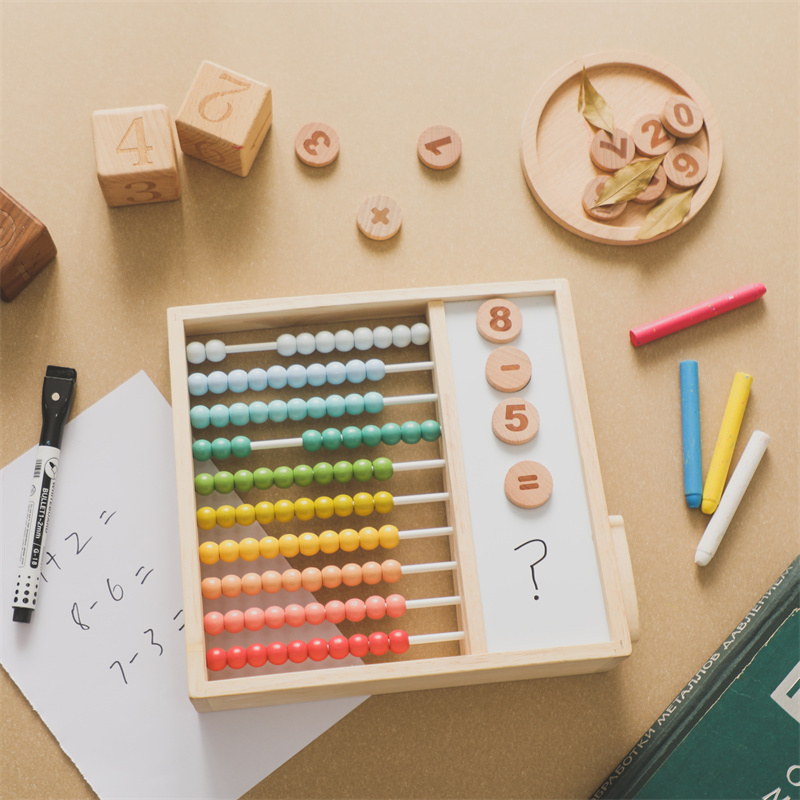
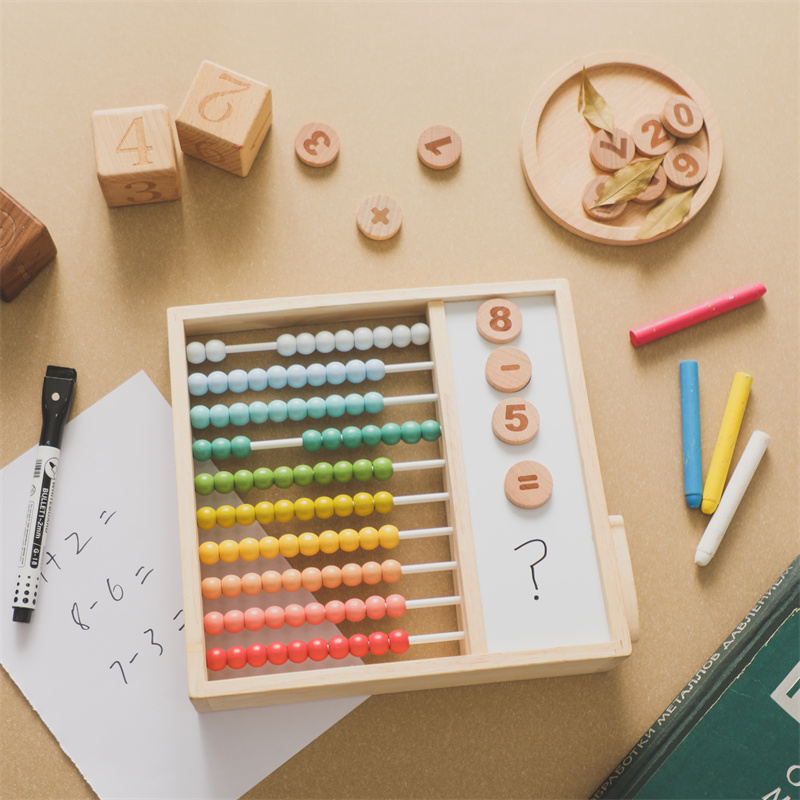
Kids Montessori Wooden Magnetic Math Counting Toy for Early Learning
Choosing a Counting Toy
Our Kids Montessori Wooden Magnetic Math Counting Toy for Early Learning is one option to consider when you want to introduce a counting activity. For ideas on using a counting toy, visit our guide to counting activities.
Choose an activity your child can handle without becoming overwhelmed, and begin with a small number of objects before moving to larger quantities. If a toy has small or magnetic pieces, keep it away from children who mouth objects and supervise play according to the manufacturer’s age and safety guidance.
Check the product’s listed specifications when evaluating choosing a counting toy.
How to Use and Care for Montessori Materials
Keep a few accessible activities on a low shelf or in a basket so your child can choose, use, and put them away with growing independence. Rotate materials when interest fades or skills change, rather than offering so many choices that your child has trouble settling on one.
Inspect toys regularly for loose parts, damage, or wear, and remove anything unsafe from play. Clean materials according to their care instructions; for wooden items, avoid soaking them unless the manufacturer specifically says it is safe.
FAQ
What qualifies a toy as Montessori?
A Montessori-aligned toy invites purposeful, hands-on exploration and gives a child room to practice independently. Its fit depends on the child’s developmental stage and how it is offered, not just a label or material.
What are some real Montessori toys?
Simple puzzles, nesting cups, matching cards, and counting materials can all support Montessori-style activities. Child-size tools for pouring, sweeping, or other everyday tasks can also encourage independent practice.
See if Kids Montessori Wooden Magnetic Math Counting Toy for Early Learning fits your setup








Leave a comment